
Nature keeps its own calendar. Whether it’s the first flower to bloom in spring or birds migrating in fall, plants and animals all respond to the changing seasons each year. Phenology (fee·naa·luh·jee) is the study of these recurring changes or, in other words, learning how to read nature’s calendar! Phenology helps us notice seasonal patterns and understand what they reveal about the world around us.
At the Learning Campus, our Phenology Trail invites guests to slow down, look closely, and experience Gulf State Park from nature’s point of view. Created as part of the USA National Phenology Network, the trail helps our team, students, and guests observe marked native plants throughout the year and contribute valuable information to a broader scientific record of Alabama’s coastal ecosystems.
But the story of these plants reaches much further back than the previous season. For centuries, indigenous peoples used many local plant species for a variety of medicinal and ceremonial practices. One of the oldest native groups in Alabama, the Creek, would have certainly tracked how plants changed during the year, making them the first true phenologists!
As you explore the plants featured along the trail, you’ll find each plant’s name in both English and the Creek language of Mvskoke (Muscogee) as well as information on its traditional uses and the seasonal changes that make it part of nature’s living calendar.
Special thanks to the Poarch Creek Indian Tribe’s Calvin McGhee Cultural Department for providing the audio recordings and Mvskoke spellings.
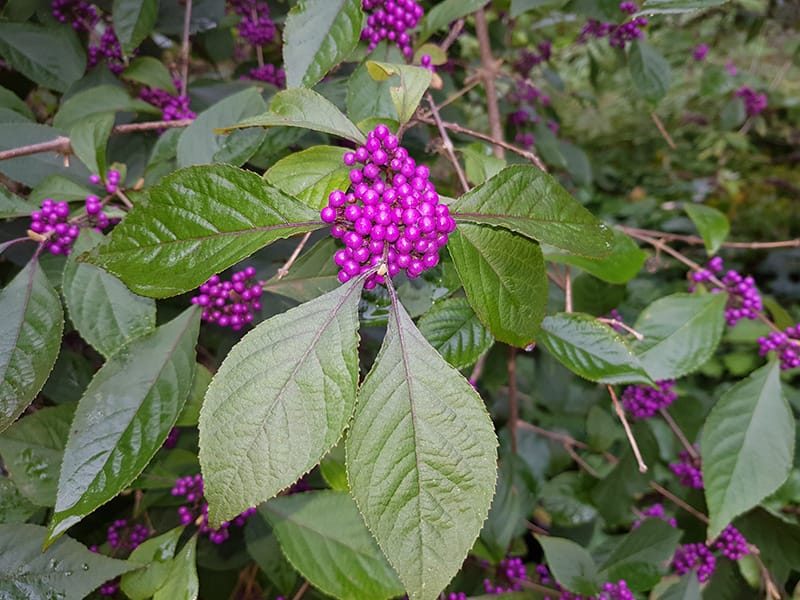
For centuries, Alabama’s Indigenous peoples used the beautyberry plant for a variety of medicinal purposes. The roots, leaves, and stems of the plant were boiled and made into a mixture that was used in sweat baths to treat both malarial fevers and rheumatism. The boiled plant parts were poured into a large pan that was placed near the patient inside a sweathouse. A similar method using only the roots was used to treat dizziness and stomach aches.
In addition to medicine, the plant also served as a natural insect repellent. The leaves and stems were crushed to release compounds like callicarpenal that naturally repel biting insects like mosquitoes, ticks, and horseflies!
Mvskoke (Creek) name:
Catv-folotv
Pronounced:
Jah-duh-fo-low-duh
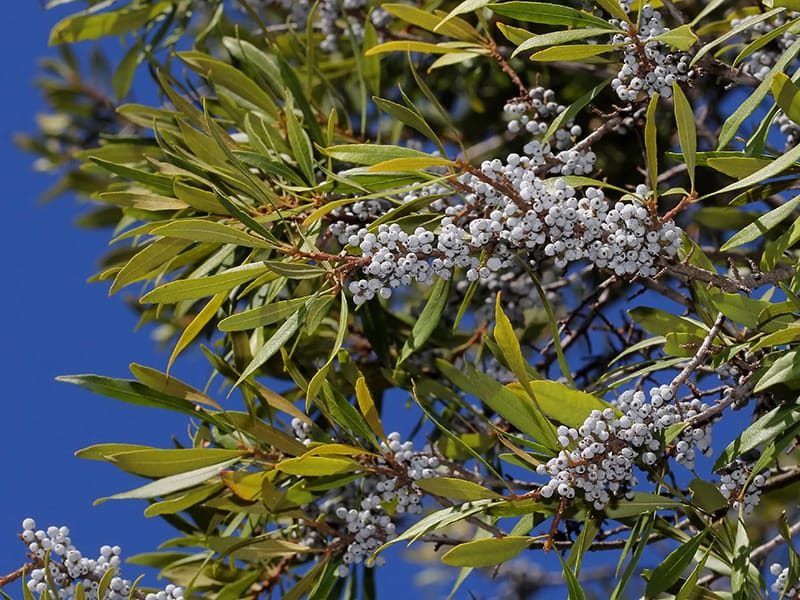
The wax myrtle is an evergreen shrub that can grow to more than 40 feet tall. The leaves of this plant are covered in small resin glands that release aromatic oils with a pine-like scent. Wax myrtle blooms during late winter through early spring and the resulting berries are a crucial winter food supply for many different bird and mammal species.
Wax myrtle was used medicinally by many of the Indigenous peoples of the southeastern United States, including the Creek, Choctaw, Koasati, Houma, and Seminoles for a wide variety of ailments such as fever, sore throat, minor skin irritations, and headaches.
Mvskoke (Creek) name:
Sule cvpe
Pronounced:
Soo-leh juh-bee
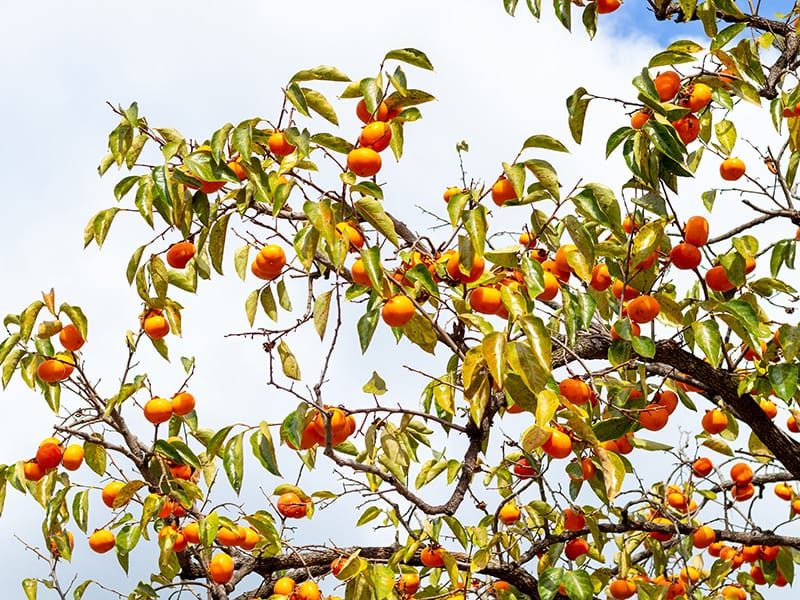
The American persimmon is a deciduous tree that typically grows 35–60 feet tall and is easily recognized by its dark, deeply furrowed bark that forms distinctive square-shaped plates. During the spring, persimmon produces small, white flowers that develop into bright orange fruit. Unripe fruits contain high concentrations of soluble tannins that give the fruit a strong astringent taste but as the fruit continues to ripen into the fall, these tannins become insoluble, and the fruit becomes much sweeter!
American persimmon was an important native fruit used by Indigenous peoples throughout the southeastern United States. As one of the most abundant fruits across traditional Mvskoke (Creek) homelands, persimmon fruit was eaten fresh, dried, and even made into breads and cakes.
Mvskoke (Creek) name:
Svtvpe
Pronounced:
Suh-duh-bee
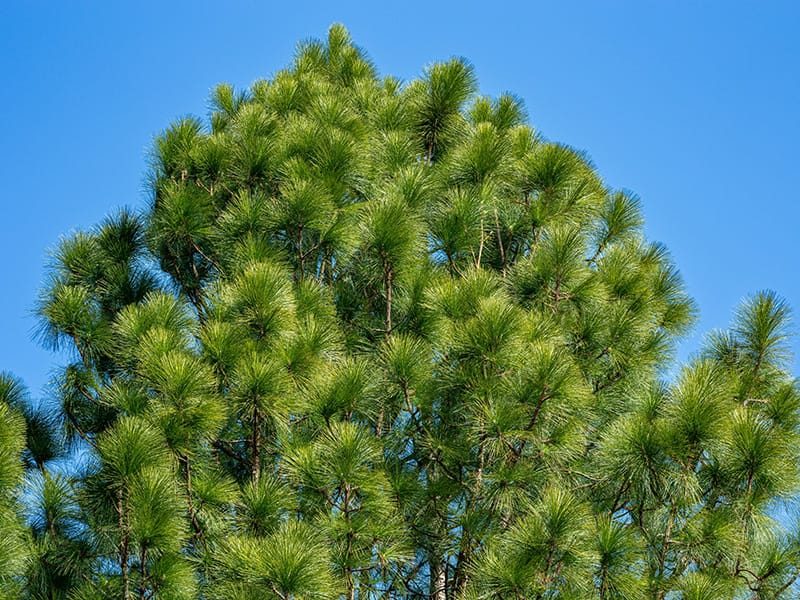
Longleaf pine is a slow-growing tree native to the southeastern United States and is well adapted to frequent, low-intensity fires. Its thick bark helps protect the vital vascular tissue inside the trunk, while seedlings can remain for years in a grass-like stage, developing deep taproots while staying low enough to withstand heat. Longleaf pine savannas support exceptional biodiversity, providing habitat for hundreds of species such as the red-cockaded woodpecker, gopher tortoise, and numerous pollinators. Regular fire helps maintain these ecosystems by reducing competition from hardwoods, recycling nutrients, and allowing sunlight to reach the diverse understory of grasses and wildflowers.
For centuries prior to European colonization, Southeastern natives such as the Mvskoke and Seminoles maintained the longleaf pine savannas through intentional, low-intensity cultural burning. These fires cleared understory to improve the ease of hunting and travel and encouraged the growth of edible plants. Cultural burning practices were suppressed for much of the 19th and early-20th centuries, but controlled burns are now considered an essential strategy in the management of these ecosystems.
Mvskoke (Creek) name:
Cule
Pronounced:
Joo-lee
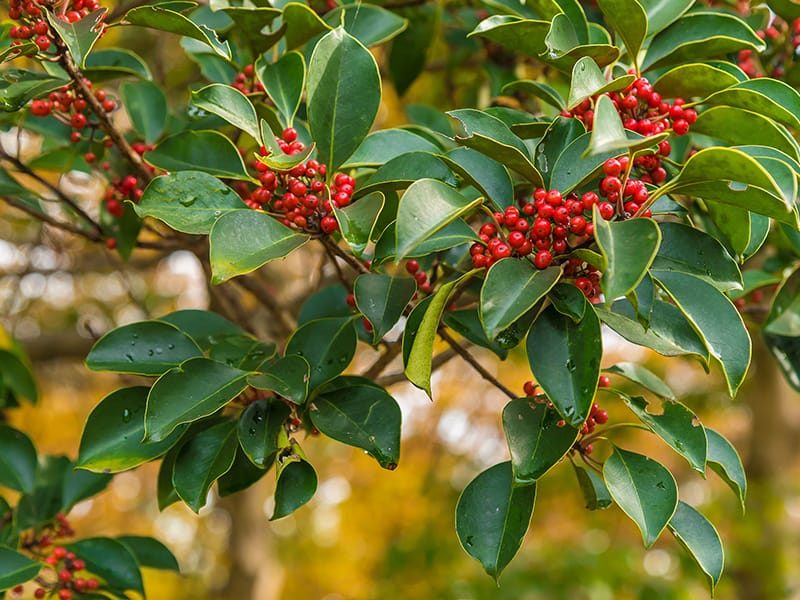
Yaupon holly is a fast-growing evergreen shrub native to the southeastern United States that typically blooms during late spring, producing small white flowers that attract a variety of native bees and other pollinators. Female plants develop bright red berries during the fall and winter that provide an important food source for songbirds and other wildlife, while the dense evergreen foliage offers year-round shelter and nesting habitat. Highly tolerant of salt spray, drought, and a wide range of soil conditions, yaupon holly thrives in coastal forests and dune habitats.
For the Mvskoke (Creek), yaupon holly was one of the most culturally significant plants. Its leaves were brewed into the ceremonial “Black Drink,” a naturally caffeinated tea used during important council meetings, rituals of purification, and other sacred ceremonies. Black Drink symbolized spiritual cleansing, renewal, and preparation for significant communal decisions.
Mvskoke (Creek) name:
Vsse
Pronounced:
Uh-see
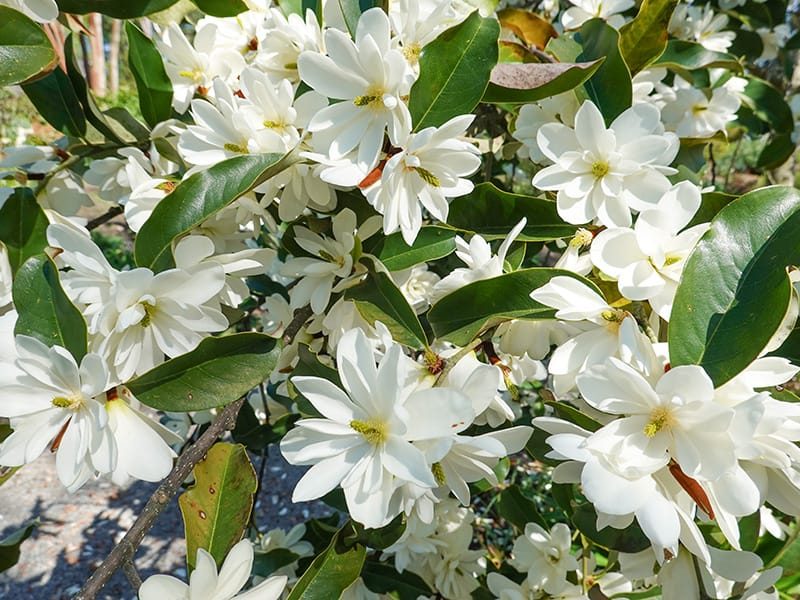
Southern magnolia is a deciduous to semi-evergreen tree that thrives in wetlands and damp forests. Its white, lemon-scented flowers typically bloom from May through July before developing cone-like fruits with bright red seeds. Adapted to wet soils but tolerant of a range of growing conditions, southern magnolia can reach 50–80 feet tall. These trees play an important role in maintaining the biodiversity of southeastern wetland ecosystems.
The Mvskoke (Creek) people valued southern magnolia for its medicinal properties. Teas prepared from the aromatic bark and roots were traditionally used to treat fevers, digestive ailments, and other common illnesses, making this wetland tree an important part of traditional plant knowledge.
Mvskoke (Creek) name:
Tolv
Pronounced:
Toh-luh
Special thanks to the Poarch Creek tribe for providing translations and audio files.